
Browse Items (3473 total)
Sort by:
Ashley School Fire
Aberdeen's women suffragists were not particularly militant. However, in May 1913, the new annexe to Ashley Road School went on fire, and the blame was pinned firmly on militant women suffragists: women's footprints were found around the scene of the…
Women Suffragists
A series of articles from the Aberdeen Daily Journal, between January 1907 and July 1914, relating to women's suffrage.
Suffragettes
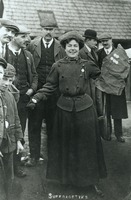
These five images come from an open-air meeting held at Laurencekirk mart in April 1908. In this month, a series of open-air meetings were held in Kincardineshire and Aberdeen, from Auchenblae to Aberdeen Fish Market. They were addressed by Miss Mary…
Votes for Women: For and Against
The case for votes for women is put by a woman. She points out that women want the vote for the same reasons as men did. It is ridiculous that a female landowner cannot vote whilst her male servant can. Women pay rates and income tax but do not have…
Photos
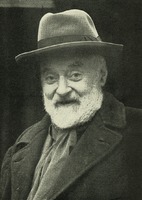
Two images of James Leatham. In the second, Provost Leatham is first on the left, beside his wife.
James Leatham - obituary from the Turriff Advertiser

The obituary describes Leatham as ‘prophet, publicist, pioneer and printer’ and points out that he had a ‘practical outlook’.
The Last Speech of the Town's Officers

Song referring to Burgh Reform. It relates to the unelected, pre-1833 Aberdeen town council and corruption.
North Aberdeen - the vacant chair

This political cartoon relates to the North Aberdeen by-election of 1896. Duncan Pirie, the Liberal candidate won by a majority of 430 votes over the Labour candidate.
The Aberdeen Shaver

The Shaver considers its view of the history of Reform in Aberdeen. It mentions some of the working class leaders, such as John Cant (a tanner), John Warden (schoolmaster) and John Davidson (writer and printer).
The Quizzing Glass

The Quizzing Glass was a short-lived publication from the mid-1830s, produced by the Aberdeen printer, John Watt. Watt, who produced political pamphlets, took a Radical viewpoint.